
London Public Transport Guide

London transport and the Underground
London has an extensive public transport network, including the London Underground, buses, the Elizabeth line, London Overground, National Rail, Docklands Light Railway, trams and river services. For most visitors, the quickest way to cover longer distances is by Tube or rail, while buses and walking are useful for shorter journeys and sightseeing.
London Backpackers is approximately one minute on foot from Hendon Central Underground station. The station is on the Northern line’s Edgware branch and sits on the Zone 3 and Zone 4 boundary, providing direct connections towards Camden Town, Euston, King’s Cross, Tottenham Court Road and central London.
Before travelling, check the TfL Go app or Journey Planner for live service updates, planned engineering work and step-free route information. Allow additional time during weekday peak periods and when travelling with luggage.
Quick Guide: Which Transport Should You Choose?
| Journey Need | Usually, Suitable | Check Before Travelling |
|---|---|---|
| Longer Journeys Across London | Tube, Elizabeth line, Overground or National Rail | Correct line, branch, destination and interchange |
| Short Central-London Journeys | Walking or bus | Traffic, walking distance and accessibility |
| Sightseeing | Bus, walking or river service | Separate sightseeing-ticket conditions |
| Late-Night Return | Night Tube, night bus or licensed taxi/minicab | Operating night, last service and branch coverage |
| Heavy Luggage or Reduced Mobility | Route with fewer changes or step-free option | Lift status, interchange distance and platform access |
First-time visitors should look beyond the line colour and check the train’s final destination. Several London Underground lines divide into branches. For London Backpackers, the important detail is to board a Northern line train travelling towards Edgware rather than a High Barnet or Mill Hill East branch service.
At stations, stand on the right-hand side of escalators and keep the left side clear for people walking. Allow passengers to leave before boarding, move away from the doors when space is available and keep luggage close without blocking aisles or platforms.
Oyster or contactless: which should visitors use?
Most adult visitors can pay as they go using either a contactless bank card, a compatible mobile wallet or an Oyster card. Both methods can be used across most TfL services and can provide automatic fare capping on eligible journeys. Daily and weekly capping rules vary by payment method and travel period, so check the current TfL conditions before travelling.
| Consideration | Contactless | Oyster |
|---|---|---|
| Best Suited To | Adults with a compatible contactless card or mobile wallet | Visitors who prefer a separate travel card or need an eligible concession |
| Preparation | No advance purchase is normally required | The card must be obtained and topped up |
| Fare Caps | Eligible journeys are capped automatically | Eligible pay-as-you-go journeys are capped automatically |
| Overseas Cards | Check card compatibility and foreign transaction fees | Can avoid repeated overseas bank-card charges |
| Children and Discounts | Standard adults pay-as-you-go fare | Some visitor, child and Railcard discounts may require Oyster |
Always use the same card or device throughout a journey. A physical bank card and that card stored in a mobile wallet may be treated as different payment methods. Each traveller needs their own contactless card or Oyster card.
Touch in and out on Tube and rail journeys. On London buses, touch in when boarding but do not touch out. Missing a required touch can result in an incomplete journey or maximum fare.
When contactless is likely to suit you
Contactless is often convenient for an adult travelling alone or with other adults who each have their own accepted card or device. There is no need to top up in advance, and eligible journeys are considered automatically for the appropriate cap. Before relying on it, check whether your card issuer charges foreign transaction or currency-conversion fees and whether your card is accepted for TfL travel.
When Oyster may be more suitable
An Oyster or Visitor Oyster card may suit visitors who prefer to set a travel budget, do not want to use their bank card repeatedly, have an overseas card that may not be accepted or are travelling with an older child who may qualify for a Young Visitor discount. Visitor Oyster cards have their own purchase conditions, so check the current fee, delivery arrangements and discount rules before ordering.
Contactless and Oyster mistakes to avoid
- Do not let two people use the same card or device for the same journey.
- Do not touch in with a phone and touch out with the physical card linked to that phone.
- Keep other contactless cards away from the reader to avoid card clash.
- Check journey history if a gate is open or a reader appears not to register the touch.
- Ask station staff before travelling if a child, Railcard or other concession may apply.
For families, the best payment choice can differ by age. Children under 11 may travel free on certain services when accompanied by a fare-paying adult, while children aged 11–15 may be eligible for discounted travel through the appropriate Oyster arrangement. Age, service and accompaniment conditions apply, so verify the latest TfL guidance for every child in the group.
Peak times, fare zones and caps
Tube and rail fares can vary according to the zones travelled through and whether a journey is made during peak or off-peak periods. Central London is mainly in Zone 1, while Hendon Central is on the Zone 3 and Zone 4 boundary. London bus fares are not calculated by fare zone.
Pay-as-you-go fare caps limit the amount charged for eligible journeys during the relevant capping period. TfL calculates a daily cap across journeys that start from 04:30 and finish before 04:30 the following day. Weekly capping and Travelcard validity depend on the payment method and travel period, so visitors should check TfL’s current guidance before buying a separate ticket.
Travelcards can still be appropriate for some visitors, particularly where a concession or longer travel period applies. However, they should not automatically be presented as the best alternative to Oyster or contactless. Check that any Travelcard covers all required zones and services.
How London fare zones work
London’s rail network is divided into fare zones. A journey that starts, finishes or passes through more zones can cost more than a shorter journey within fewer zones. Zone boundaries matter mainly for Tube and rail travel; ordinary TfL bus journeys use the bus fare system rather than charging according to each zone crossed.
Hendon Central is shown as Zone 3+4 because it sits on a boundary. This can affect the cap or Travelcard coverage applied to a journey. Visitors staying at London Backpackers should therefore check the price for the complete journey they plan to make, rather than assuming every central London fare covers Hendon.
Peak and off-peak travel
Peak charging generally applies during the busiest weekday travel periods, while off-peak fares apply at other times, weekends and public holidays. The direction, service and ticket type can affect the fare, so use TfL’s Single Fare Finder when the exact cost matters. Travelling outside the busiest periods can also make journeys with luggage more comfortable.
How capping helps
A cap is the maximum charged for eligible pay-as-you-go journeys within the relevant travel period and zones. Continue touching in and out correctly even after you believe a cap has been reached. River services, the London Cable Car, premium rail services or journeys outside the standard rules may not be included in the same cap.
Should you buy a Travelcard?
Compare the Travelcard price with the relevant pay-as-you-go cap, number of travel days, zones required, child or group eligibility and any National Rail benefits. A Travelcard may suit a traveller who wants a defined period of unlimited eligible travel, but contactless or Oyster pay as you go may be easier for many adult visitors. There is no single best answer for every stay.
Transport tickets and attraction offers
Some London attraction offers require a qualifying National Rail ticket rather than an Oyster or contactless journey. Eligibility, participating attractions and booking conditions can change, so read the offer terms before planning a visit.
London offers plenty to see beyond its transport network. Depending on your interests, you can plan time for London plays, musicals and comedy shows, visit some of London’s museums, or explore popular tourist attractions across the city.
Transport-based attraction promotions should be explained separately from theatre-ticket packages, hotel packages and general discounted-entry offers. A visitor should be able to identify which company operates an offer, which travel ticket qualifies, whether advance booking is required and whether the offer applies on the intended date.
Where a 2FOR1 offer depends on National Rail travel, an Oyster or contactless payment record may not be sufficient evidence by itself. Avoid promising that an Oyster card automatically unlocks every attraction discount. Instead, direct visitors to the current official offer conditions and retain the existing London attraction links as further reading.
The hostel can still add value by suggesting free attractions, walkable neighbourhood groups and lower-cost itineraries that reduce unnecessary transport. For example, visitors can combine nearby attractions in Westminster, the South Bank, the City or Greenwich rather than crossing London repeatedly during the same day.
Buses
London’s red buses are useful for local journeys and sightseeing. Check the route number and destination displayed on the front of the bus and confirm that the stop serves your route. At a request stop, clearly signal as the bus approaches. Press the stop button in good time when you are ready to leave.
London buses do not accept cash. Touch a contactless card, mobile device or Oyster card on the yellow reader when boarding. Do not touch out when leaving. Use the same card or device for every eligible journey so that the correct fares and caps can be applied.
TfL’s Hopper fare allows eligible pay-as-you-go passengers to make further bus and tram journeys within the specified period after the first touch. Check the current fare and conditions on the TfL website before travelling.
Public TfL buses and commercial sightseeing buses are different services. Hop-on, hop-off sightseeing tours use separate tickets and do not form part of the standard TfL bus fare system.
Buses can also be a practical way to reach popular tourist attractions, particularly when several places on your itinerary are located along the same route. Use a live journey planner to confirm the correct bus, stop letter and direction of travel.
How to take a London bus step by step
- Use TfL Go or Journey Planner to find the route number, stop letter and direction of travel.
- At the stop, check the route number and destination shown on the information panel and approaching bus.
- Signal clearly if the stop is served on request, then allow passengers to leave before boarding.
- Touch the same contactless card, device or Oyster card on the yellow reader. Do not attempt to pay with cash.
- Watch the onboard display or follow the journey on your phone, then press the stop button before the required stop.
Bus stops serving several routes may be spread across different sides of a junction. The stop letter matters as much as the stop name. When changing buses, confirm the second stop and direction instead of assuming it will be beside the first.
Wheelchair users have priority in the designated wheelchair space. Travellers with buggies or large luggage should follow the driver’s instructions and avoid blocking doors or aisles. At busy times, a route with fewer changes may be easier than the theoretically quickest journey.
Several local bus routes serve the Hendon Central area. Rather than maintaining an undated list in the main article, link to the live Hendon Central bus-stop page and highlight only routes that are particularly useful for guests after confirming their current stops and destinations.
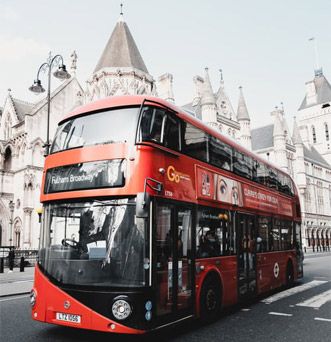
Double-decker buses and sightseeing tours
Double-decker buses remain one of London’s most recognisable forms of transport. Regular TfL routes can provide an affordable way to see different neighbourhoods, although journey times may be affected by traffic. If available, the front seats on the upper deck provide a good view of the route.
Night buses do not automatically charge a higher fare than daytime TfL buses, and many services operate throughout the night. Commercial sightseeing buses have separate prices, routes and operating hours, so compare these with ordinary public buses before booking.
Use an official journey planner or live bus app rather than relying only on a printed map. Always check the destination shown on the bus, as the same route number can travel in two directions.
For ordinary sightseeing, a public double-decker bus can be a useful alternative to a paid tour when the route passes several places a visitor wants to see. However, there is no commentary, reserved seat or guarantee of an upper-deck view, and traffic may make the journey slower than expected.
Commercial sightseeing tours may provide recorded or live commentary, a defined sightseeing circuit and hop-on, hop-off privileges. Their tickets, validity, accessibility arrangements and first or final departure times vary by operator. Visitors should compare the tour route with the attractions they genuinely plan to visit.
For a comfortable upper-deck journey, secure luggage appropriately, remain seated while the vehicle is moving where possible and use the handrail on the stairs. Move towards the exit only when it is safe, and do not stand on the staircase.
Public bus or sightseeing tour?
- Choose a public bus when the route is useful for an actual journey and you are comfortable travelling without commentary.
- Consider a sightseeing tour when commentary, a circular route and flexible sightseeing stops justify the separate ticket price.
- Check accessibility, operating hours, cancellation conditions and whether a river cruise or attraction entry is bundled into the tour ticket.
Cruise Along the River Thames
River travel provides an alternative view of London and can be used for both sightseeing and selected point-to-point journeys. Services call at piers near attractions such as Westminster, the London Eye, Tower Bridge and Greenwich, although routes and stopping patterns vary by operator.
TfL River Bus services and commercial sightseeing cruises have different tickets, fares and timetables. Contactless or Oyster payment may be available on selected services, but river fares and caps do not always work in the same way as Tube and bus fares. Check the operator’s current information before travelling.
Depending on the selected route, passengers may see landmarks such as the Houses of Parliament, the London Eye, St Paul’s Cathedral, Shakespeare’s Globe, Tower Bridge and the Old Royal Naval College in Greenwich. Visitors interested in learning more about the city’s past can also use our guide to London’s historical sites when planning their itinerary.
Advance booking may be helpful during busy periods, but travellers should compare departure piers and return options before purchasing a sightseeing cruise.
River Bus or sightseeing cruise?
A River Bus is primarily a scheduled transport service connecting selected piers, whereas a sightseeing cruise focuses on the visitor experience and may include commentary or a circular route. Some products combine hop-on, hop-off travel with sightseeing, but this should not be assumed across operators.
Before booking, check the nearest departure pier, final destination, intermediate stops, total journey time, last return sailing and walking distance from the arrival pier. A low advertised single fare is not necessarily the best option if it does not cover the required route or return journey.
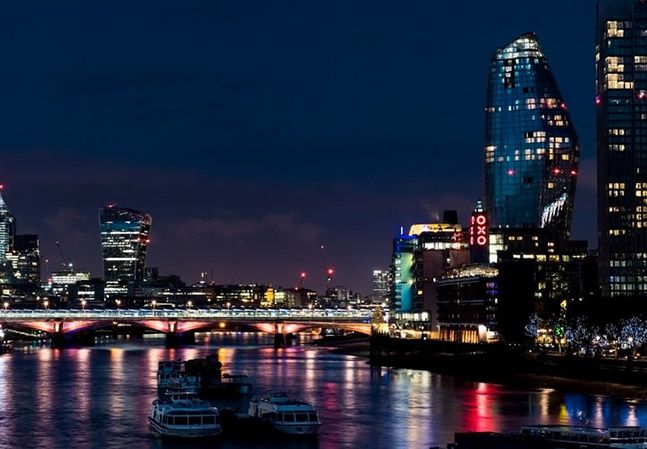
River travel can work well as part of a grouped sightseeing day. During the trip, visitors will also be able to see the infamous Tower of London, the Tower Bridge, St. Paul’s, Shakespeare’s Globe, Cutty Sark, the Old Royal Observatory, Queen’s House, Fan Museum, and other historical sites. The river journey should support the itinerary rather than requiring visitors to cross London again unnecessarily.
Weather can affect comfort on open decks, and service frequency may differ by day or season. Visitors with wheelchairs, mobility scooters, buggies or heavy luggage should check the accessibility of both the vessel and the selected piers before travelling.
River journey checklist
- Confirm whether the service is TfL-linked transport or a separate sightseeing operator.
- Check whether Oyster or Contactless is accepted and whether the fare contributes to any cap.
- Check the exact pier name, as several central London piers are within walking distance of one another but serve different routes and operators.
- Review the last sailing and alternative route back to Hendon Central.
Driving and parking in London
Public transport is normally more practical than driving in central London because parking can be limited and additional charges or restrictions may apply. Visitors planning to drive should check their route, parking conditions, vehicle requirements and any applicable London driving charges before setting off.
For accommodation-specific parking questions, contact London Backpackers before arrival. Do not assume that a central London car park or street space will be available without advance research.
Drivers may need to consider the Congestion Charge, Ultra Low Emission Zone requirements, controlled parking zones, permit restrictions and the individual terms of a private car park. These schemes are separate, and paying for one does not automatically cover another. Check official information using the vehicle registration and planned travel date.
If a guest is arriving by car but does not need the vehicle during the stay, compare a pre-booked car park outside the busiest central area with the onward public-transport connection to Hendon Central. The chosen facility should be checked for opening hours, height limits, overnight access, security arrangements and cancellation terms.
Avoid recommending one ‘trusted’ car park without confirming that it still operates under the same name and conditions. The hostel team should provide only verified local information and direct guests to the operator for current availability and pricing.
Driving checklist
- Check all applicable London road-user charges on official websites.
- Pre-book parking where possible and confirm overnight access.
- Do not leave luggage or valuables visible inside the vehicle.
- Plan the public transport route from the car park to Hendon Central.
Airports in London
The worlds largest airport and getting larger with a new terminal almost ready and another runway planned. Heathrow airport is 15 miles west of London , on the M4 motorway, near the M25 interchange. Heathrow is served by a number of means of public transport, the Underground extends through the Piccadilly Line to the airport and it takes about an hour to get into central London . Alternatively you can get the Heathrow express which is a quicker, but more expressive way of getting into central London . It departs from Heathrow every 15 minutes and takes just 15 minutes, and arrives in London Paddington.
London is served by several airports, and the most convenient route depends on the terminal, arrival time, engineering work and amount of luggage. The route suggestions below are starting points; always confirm the journey shortly before travelling.
| Airport | Main Public-Transport Choices | Useful Interchange Towards Hendon | Planning Note |
|---|---|---|---|
| Heathrow | Elizabeth line, Piccadilly line, Heathrow Express, coach | Tottenham Court Road or another Northern line connection | Check the terminal served and premium-fare exclusions |
| Gatwick | Thameslink, other rail services, Gatwick Express, coach | St Pancras / King’s Cross | Compare directness, ticket validity and late services |
| Luton | Luton DART, Thameslink, coach | St Pancras / King’s Cross | Include the airport-to-Parkway connection |
| Stansted | Stansted Express, coach | Tottenham Hale and Euston, or Liverpool Street | Compare coach arrival point with rail changes |
| London City | DLR, bus, taxi/minicab | Bank or another Northern line connection | Check lifts and interchange walking distance |
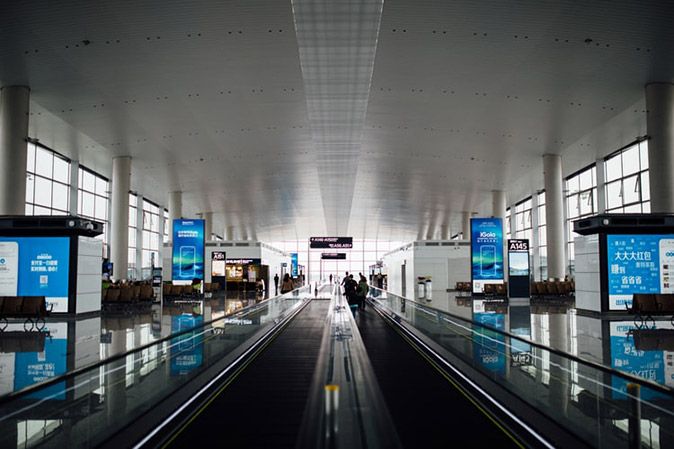
Heathrow Airport
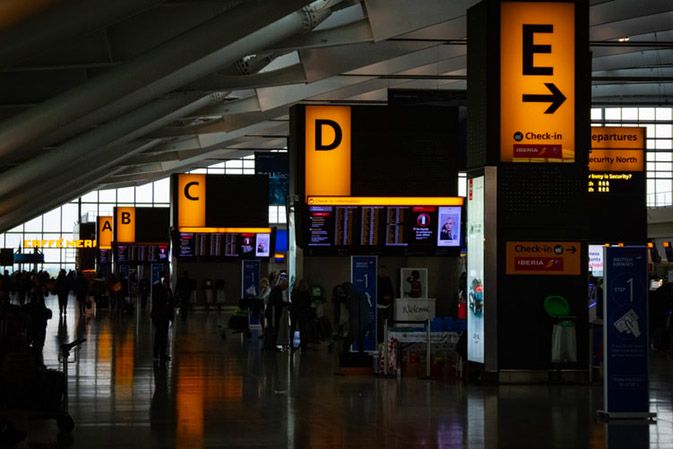
Gatwick Airport
Thameslink services connect Gatwick Airport with St Pancras International. From there, follow signs to King’s Cross St Pancras Underground station and take a northbound Northern line train on the Edgware branch to Hendon Central. Gatwick Express and other rail services may be suitable where a different central London interchange is preferred.
Rail tickets and contactless acceptance can vary by service and destination. Check whether the selected ticket covers the complete journey and whether changing at St Pancras offers a more practical route than travelling to Victoria. When carrying luggage, allow time to walk between the National Rail platforms and the Underground station.
Luton Airport
From Luton Airport, use the Luton DART to reach Luton Airport Parkway, followed by a Thameslink train towards St Pancras International. Change at King’s Cross St Pancras for a northbound Northern line train on the Edgware branch to Hendon Central.
The airport and Luton Airport Parkway are separate, so the DART or another airport-transfer connection must be included in the journey plan. Coach services may arrive at different London locations and can be useful at certain times, but road traffic and the final connection to Hendon should be considered.
London City Airport
The Docklands Light Railway connects London City Airport with the wider London transport network. One possible route is to travel to Bank and change to a northbound Northern line service towards Edgware. Check step-free requirements and service changes before travelling with heavy luggage.
Bank is a large interchange, and the walk between platforms may be inconvenient for some travellers. Use TfL’s step-free option to compare Bank with alternative interchanges, especially when travelling with a wheelchair, buggy or multiple suitcases.
Stansted Airport
The Stansted Express runs towards Liverpool Street, while coach services serve several London locations. A possible rail route is to change at Tottenham Hale for the Victoria line to Euston, then take a northbound Northern line train on the Edgware branch to Hendon Central. Compare the route with Liverpool Street and coach alternatives before travelling.
A coach may reduce rail-ticket complexity but can take longer in traffic and may leave passengers farther from the most convenient Northern line interchange. Check the exact London arrival stop, walking transfer, operating hours and luggage allowance before booking.
Airport arrival checklist
- Select the correct terminal before planning the route.
- Compare total journey time, changes, ticket coverage and walking distance—not only the airport express time.
- Check lift availability and step-free routes when carrying heavy luggage.
- Review the last onward train and a licensed late-night alternative.
- Keep the hostel address and Hendon Central walking directions available offline.
Night Travel
London has a combination of Night Tube, Night Overground and night-bus services. Night Tube services operate on selected lines and sections on Friday and Saturday nights. Other Underground lines and branches may finish earlier, so check the final service and planned closures before leaving central London.
The Northern line forms part of the Night Tube network, but travellers should confirm that the required branch and Hendon Central are served on the night of travel. Night buses, including services near Hendon Central, may provide an alternative when the Tube is not operating.
For a late journey back to the hostel, plan the complete route before travelling, keep enough phone battery for live directions and use only a licensed black cab or properly booked licensed minicab when public transport is unsuitable.
How to plan a late return to Hendon
- Check whether the journey falls on a Friday or Saturday night when Night Tube services may operate.
- Confirm the Northern line branch and that Hendon Central is served at the required time.
- Check the last train from the specific central London station rather than relying on a general Tube closing time.
- Save a night-bus alternative, including the stop letter and final walking route to the hostel.
- If public transport is unsuitable, use a licensed black cab or a minicab booked through a licensed operator.
Night Tube fares are treated as off-peak fares, and eligible Oyster or contactless journeys can contribute towards the relevant cap. However, a Day Travelcard is valid only under its own date and time conditions, so check whether it covers a journey starting after midnight.
Night buses may operate every night even when Night Tube services do not. The route number, stop location and frequency can differ from daytime journeys. A visitor should check the live route rather than assuming the night bus leaves from the same stop as the daytime service.
Travellers returning alone should stay in well-lit areas, keep personal belongings secure, avoid unlicensed drivers and tell someone their expected arrival time. TfL stations remain staffed while Night Tube trains are operating and help points are available across the network.
Transport Apps, Maps and Live Updates
Use the official TfL Go app or Journey Planner to plan journeys, check live arrivals, review line disruptions and select accessible routes. Save the hostel address and Hendon Central station before setting out, particularly if mobile data may be limited after arriving in the UK.
A Tube map helps visitors understand line connections, but it does not show walking distance inside stations, street-level geography or the best bus stop. Combine the official network map with live journey instructions and a street map for the final walk.
First and last train times vary by station, direction and day. Engineering work can also change routes at weekends. Link to live information rather than maintaining a static timetable that can quickly become inaccurate.
Common London Transport Mistakes
- Using one card for several people: Each traveller needs a separate valid payment method where a touch is required.
- Changing between phone and physical card: Use the same card or device for the complete journey and capping period.
- Touching out on a bus: Touch in when boarding; do not touch out on an ordinary London bus.
- Boarding the wrong Northern line branch: For Hendon Central, look for a train travelling towards Edgware.
- Assuming every airport express is fastest: Compare the complete route to Hendon, including interchanges and walking.
- Relying on an old fare table: Check the current TfL fare finder, caps and ticket conditions.
- Ignoring the last onward connection: A late airport train may arrive after the final convenient Underground service.
- Keeping several contactless cards together: Remove the intended card from the wallet to reduce the risk of card clash.
OUR OTHER GUIDES
London’s Nightlife Introduction & Essential Information Food And Drink London’s Museums Historical Sites Entertainment London’s Parks Days Out & Mini-Breaks Sports Shopping